Rows Before Curls: The Truth About Building Arms That Actually Look Massive
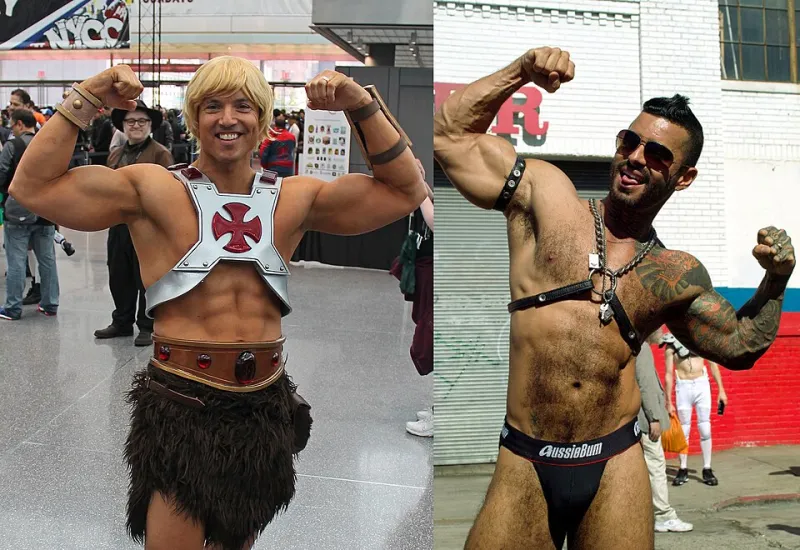
Photo: istolethetv and Kent, CC BY-SA 2.0, via Wikimedia Commons
Walk into any gym on a Monday — or honestly, any day — and you'll find at least three guys standing in front of the mirror grinding out set after set of barbell curls. Arms pumped, veins popping, confidence high. And yet, somehow, those same guys have been rocking the same arm circumference for the past two years.
If that sounds familiar, you're not alone. The bicep curl is probably the most iconic exercise in all of lifting. It's the move that launched a thousand tank tops. But here's the uncomfortable truth: if curls are the centerpiece of your arm training, you're building on a foundation that doesn't exist.
Why Isolation Work Has a Ceiling
Bicep curls are what sports scientists call an isolation exercise — a movement that targets a single muscle group with minimal involvement from surrounding muscles. They have their place. Nobody's saying ditch them entirely. But isolation exercises are finishing touches, not construction tools.
The biceps are a relatively small muscle group. They max out at a certain growth potential when trained in isolation because the mechanical tension and overall muscle fiber recruitment just aren't high enough to drive significant hypertrophy on their own. You can do 20 sets of curls a week and hit a hard ceiling because you're not giving your body a strong enough systemic stimulus to grow.
Compound movements — rows, pull-ups, lat pulldowns, deadlifts — change the entire equation. These exercises don't just recruit your biceps. They pull in your lats, rear delts, traps, rhomboids, and core. The result is a massive hormonal and mechanical response that tells your body to grow in a way that three sets of preacher curls simply cannot replicate.
The Compound-First Principle
Here's the counterintuitive part that trips most lifters up: the guys with the biggest arms in any serious gym are almost always the guys moving the most weight on rows and pull-ups. That's not a coincidence.
When you perform a heavy barbell row or a weighted pull-up, your biceps are working hard — often harder than during a dedicated curl set — because they're operating under greater total load and longer time under tension. You're also recruiting fast-twitch muscle fibers that curls, performed with lighter weights in a controlled arc, rarely fully activate.
Think of it this way: compound pulling movements are the stimulus, and isolation work is the amplifier. Without the stimulus, the amplifier has nothing to work with.
A solid foundational pulling session might look like:
- Barbell rows: 4 sets of 6–8 reps, focusing on a full stretch at the bottom
- Weighted pull-ups or lat pulldowns: 3–4 sets of 8–10 reps
- Single-arm dumbbell rows: 3 sets of 10–12 reps per side
- Face pulls: 3 sets of 15 reps for rear delt and elbow health
Notice what's not on that list yet? Curls. That's intentional.
Where Curls Actually Fit In
Once you've laid down the compound foundation, then curl variations earn their spot. By the time you get to isolation work, your biceps have already taken a significant beating from the pulling volume. Curls at this stage serve to:
- Increase total training volume for the muscle without adding excessive systemic fatigue
- Target specific heads of the bicep (the long head vs. short head) with angles compound movements can't isolate
- Drive blood flow and metabolic stress, which plays a real role in hypertrophy
A smart curl finisher after your pulling foundation might include:
- Incline dumbbell curls: 3 sets of 10–12 (long head emphasis, great stretch)
- Hammer curls: 3 sets of 12–15 (brachialis and brachioradialis, adds arm thickness)
- Cable curls: 2–3 sets of 15 (constant tension, great pump)
Two to three curl variations after your pulling work. That's it. That's the move.
The Vanity Trap and How It Kills Progress
The reason so many lifters get stuck is what coaches in the industry call the vanity trap — training what you can see in the mirror rather than what actually drives growth. Curls feel productive. You see your biceps working. The pump is immediate and satisfying.
But your body doesn't care about how good a movement looks. It responds to mechanical tension, metabolic stress, and muscle damage — and compound pulling movements deliver all three in far greater doses than isolation work ever will.
Elite bodybuilders and competitive physique athletes understand this. Their arm days aren't just arm days. They're pulling days with arm finishing work. The distinction sounds small, but it completely restructures how you approach training volume and stimulus.
Building a Smarter Weekly Split
If you're training four to five days a week, here's a framework that prioritizes pulling volume while still giving your arms dedicated attention:
Day 1 – Pull (Back/Biceps Focus) Heavy compound rows and pull-up variations, followed by 2–3 curl variations.
Day 2 – Push (Chest/Shoulders/Triceps) Bench press, overhead press, dips, tricep isolation work.
Day 3 – Legs Squats, Romanian deadlifts, leg press, accessories.
Day 4 – Pull (Volume Focus) Moderate-weight row variations, cable pulldowns, face pulls, followed by 2–3 curl variations with different angles than Day 1.
Day 5 – Push/Arms Lighter push work, then dedicated arm superset finishers — curl variations paired with tricep work.
This gives your biceps meaningful stimulus across multiple sessions without ever sacrificing compound pulling volume to make room for more curls.
The Bottom Line
Bigger arms don't come from doing more curls. They come from getting stronger on rows and pull-ups, building a serious pulling foundation, and then using curl variations to maximize what that foundation already built.
Stop treating bicep curls like the main event. Start treating them like the encore. Your arms will thank you — and so will the tape measure.