Aesthetic vs. Athletic: When Looking Jacked Stops Being Enough
Photo: Leonardo da Vinci / Wenceslaus Hollar, CC0, via Wikimedia Commons
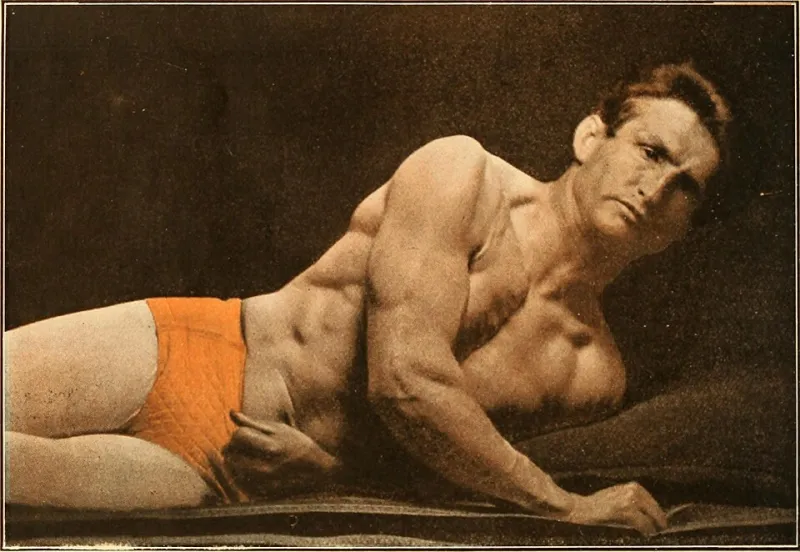
Let's be real for a second. You've spent months — maybe years — sculpting that physique. The chest pops. The arms fill out a sleeve. You look the part every time you walk into a room. But then someone asks you to do a single-leg Romanian deadlift with any real weight on the bar, and suddenly everything falls apart.
This is what trainers in the performance world call the mirror athlete problem: a body built for optics, not output. And it's more common in American gyms right now than most people want to admit.
The Vanity Training Trap
Here's how it usually goes. You start lifting, you see results, and you naturally chase more of what's working. Bicep curls make your arms look bigger, so you do more curls. Chest flies blow up your pecs, so you add another set. Before long, your program is basically a collection of isolation moves stitched together with whatever feels good in the moment.
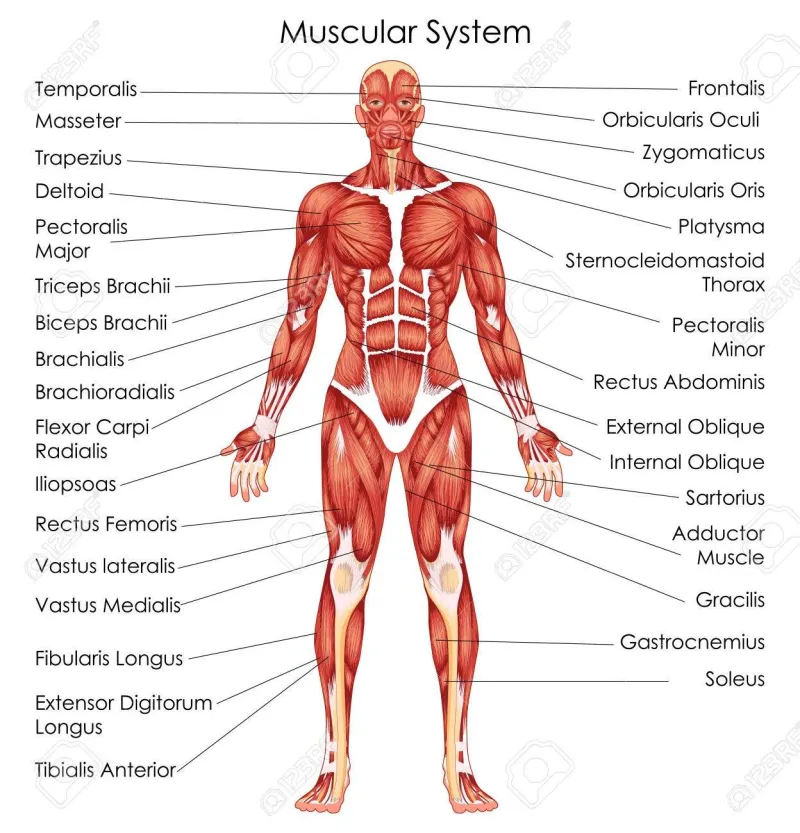
Nobody's blaming you. Aesthetic motivation is one of the most powerful drivers in the gym. But the problem is that isolation-heavy, mirror-focused training tends to create some serious imbalances over time. Your anterior chain dominates. Your posterior chain gets neglected. Stabilizer muscles go underdeveloped because they don't show up well in the mirror. And your nervous system never gets trained to produce force in complex, multi-joint patterns.
The result? You look like you should be strong. You just aren't — not in any way that translates outside of your specific, well-practiced gym movements.
What the Performance Gap Actually Looks Like
This isn't abstract. The performance gap shows up in specific, measurable ways:
- A guy with 18-inch arms who struggles to do 10 strict pull-ups
- A lifter with massive quads who can't sprint 40 yards without pulling something
- Someone who benches 225 but can't do a controlled push-up with a pause at the bottom
- A physique competitor who throws their back out picking up a box
These aren't hypotheticals. They're patterns that physical therapists, strength coaches, and sports medicine docs see constantly. The muscles are there. The movement patterns, motor control, and functional integration? Often not.
Why Hypertrophy Alone Isn't the Full Story
Hypertrophy — growing the size of a muscle — is a real, legitimate goal. Nobody here is going to tell you that building muscle mass doesn't matter. It absolutely does. But muscle size and muscle performance are related without being identical.
Strength is largely a neurological skill. Your nervous system has to learn how to recruit motor units efficiently, coordinate multiple muscle groups simultaneously, and produce force under real-world conditions. You can grow a muscle substantially through isolation work without ever fully developing those neural pathways.
Athletes and powerlifters often have less impressive physiques than bodybuilders, yet they can move more weight and generate more power. That's not a coincidence — it's training specificity at work. If you only ever train for size, that's what you get. Size without the supporting performance architecture.
The Framework: Balancing Looks and Legitimacy
So what does a smarter approach actually look like? It doesn't mean ditching your aesthetic goals. It means building a foundation that supports them.
1. Anchor your program with compound strength work
Squats, deadlifts, overhead press, barbell rows, and pull-ups should be non-negotiable. Not because they're trendy, but because they build the kind of integrated strength that isolation movements can't replicate. Aim for at least 40-50% of your weekly training volume to come from multi-joint, loaded movements.
2. Test yourself regularly — and honestly
Every 6-8 weeks, run a basic performance check. Can you do 15 strict pull-ups? Can you goblet squat your bodyweight for reps with good depth? Can you carry heavy dumbbells for 60 seconds without losing your posture? These aren't elite standards — they're baseline competence checks that'll tell you where the gaps are.
3. Train your posterior chain like it owes you money
Glutes, hamstrings, upper back, and rear delts are the most chronically undertrained muscle groups in the aesthetic-focused gym crowd. Romanian deadlifts, hip thrusts, face pulls, and rows need real estate in your programming — not just token sets at the end of a chest day.
4. Add loaded carries and unilateral work
Farmer's carries, suitcase carries, single-leg deadlifts, split squats — these movements expose weaknesses that bilateral exercises hide. They also build the kind of real-world strength that makes your physique actually functional. Two days a week of dedicated unilateral and carry work can make a significant difference in both how you move and how you look doing it.
5. Don't skip mobility work
This one gets eye-rolls, but tight hips, locked-up thoracic spines, and poor shoulder mobility are limiting your strength ceiling whether you feel it or not. Ten minutes of targeted mobility work before your sessions isn't a waste of time — it's what lets you actually use the muscle you've built.
The Payoff: Bigger AND Better
Here's the part worth sitting with: training for performance doesn't shrink your physique. In most cases, it makes it better. Compound strength work builds mass in the places that matter — the traps, upper back, glutes, hamstrings — and it tends to produce a more proportional, powerful-looking build than isolation-heavy programs.
When you can back up how you look with what you can actually do, that's when training gets genuinely satisfying. You're not just building a body for the mirror. You're building one that performs, holds up over time, and gets stronger year after year.
The biggest muscle isn't always the most impressive one. The most impressive one is the one that works.