Why Your Weak Points Stay Weak: The Accessory Work Mistakes Holding Back Your Physique

Photo: Bambizoe from Dresden, Germany, CC0, via Wikimedia Commons
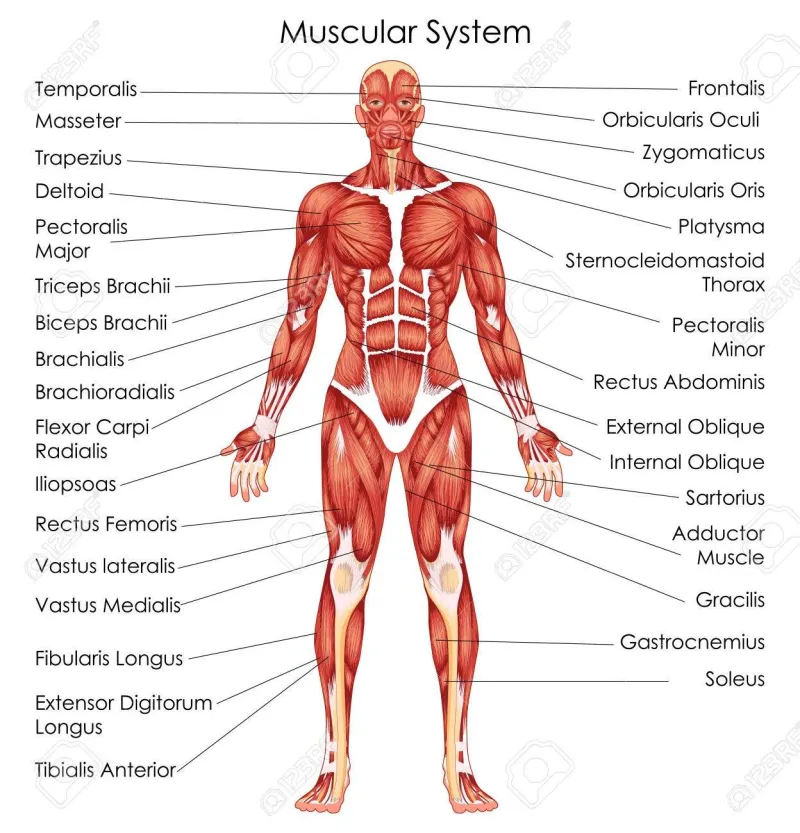
Every serious lifter has them. Those one or two muscle groups that just refuse to cooperate no matter how many isolation sets you throw at them. Your chest fills out but your rear delts look like an afterthought. Your quads are solid but your hamstrings are nowhere near balanced. You've been hammering cable curls for two years and your arms look basically the same as they did eighteen months ago.
Here's the uncomfortable truth: the problem usually isn't that you're not working those muscles. It's that you're working them in entirely the wrong way, at the wrong time, with the wrong intent. And a big part of why that keeps happening comes down to psychology, not physiology.
The Comfort Zone Problem Nobody Talks About
Let's be real about something. Most lifters gravitate toward exercises they're already decent at. It feels productive to crank out heavy preacher curls when you've got a decent pump going. It feels miserable to grind through face pulls when your rear delts are weak and the movement feels awkward and uncomfortable.
This isn't laziness — it's human nature. Your brain registers effort and competence as reward. When you're good at something, it feels like it's working. When you're bad at something, it feels like wasted time.
But here's what elite coaches understand that most recreational lifters don't: the discomfort you feel in a weak-point exercise is often the neurological gap between your brain and that muscle group. You're not bad at face pulls because face pulls are ineffective. You're bad at face pulls because your rear delts have poor neural activation, which is exactly why they're underdeveloped in the first place.
The exercises that feel most awkward for a specific muscle group are frequently the ones that will move the needle the most. That feeling isn't a signal to avoid them. It's a signal to lean in.
Why Accessory Work Gets Deprioritized (And Why That's Killing Your Gains)
Here's how most training sessions actually go: you come in fresh, nail your main compound lifts with full intensity, and then tack on accessory work at the end when your energy is flagging and your motivation is half-gone. By the time you get to your weak-point training, you're fatigued, distracted, and just going through the motions.
You're essentially training your strong points with your best effort and your weak points with your leftovers. And then you wonder why the imbalances never close.
This is the structural mistake that keeps most physiques stuck in the same pattern year after year.
5 Strategies Elite Coaches Use to Force Stubborn Muscles to Grow
1. Prioritize Weak Points First — Actually First
The most direct solution sounds almost too simple: move your weak-point work to the beginning of your session, before your main lifts, when your nervous system is fresh and your focus is sharp.
Yes, this means your bench press might feel a little off after pre-exhausting your rear delts. That's the trade-off, and for most lifters, it's absolutely worth it. A slightly weaker main lift for six to eight weeks versus a physique imbalance that's been stuck for two years? Do the math.
Many top-level physique coaches structure entire training blocks around this concept, building the programming specifically around bringing up lagging body parts rather than defaulting to whatever feels best to train.
2. Increase Frequency, Not Just Volume
If a muscle group is genuinely stubborn, hitting it once a week with extra sets isn't usually the answer. Frequency is often the missing lever.
Research consistently shows that training a muscle two to three times per week produces greater hypertrophy than the same total volume crammed into one session. Stubborn muscles often respond even better to higher frequency because you're giving the neural connection more practice, more stimulus, and more opportunities to adapt.
This doesn't mean annihilating your weak points three days in a row. It means strategic, moderate-volume sessions spread across the week — enough stimulus to drive adaptation without accumulating so much fatigue that recovery becomes the limiting factor.
3. Use Isolation Before Compound Movements (Pre-Exhaustion)
This one is counterintuitive and it works. Pre-exhaustion means performing an isolation exercise for a weak muscle group immediately before a compound movement that involves that same muscle.
Example: if your chest is the weak link in your pressing, do a set of cable flyes or a chest-focused machine before your bench press. Your pecs will reach failure sooner during the compound movement, forcing greater recruitment and fatigue in exactly the muscle you're trying to develop.
Elite bodybuilding coaches have used this approach for decades. It feels strange at first because your numbers on the compound lift will drop. Get comfortable with that. The goal is muscle stimulus, not the number on the bar.
4. Audit Your Exercise Selection Ruthlessly
Not all isolation movements are created equal, and there's a surprisingly common pattern where lifters spend years doing the wrong exercise for the muscle they're trying to develop.
The clearest example: lateral raises for shoulder width. Most people perform them in a way that primarily loads the front delt, not the lateral head. Small tweaks — slightly leaning forward, changing the angle of the elbow, leading with the pinky — dramatically shift the stimulus to the target muscle.
Before assuming your weak point just doesn't respond, spend two to three weeks dissecting the quality of your exercise execution. Video yourself. Study the movement. Ask a knowledgeable coach or training partner for a second set of eyes. You might find that years of misdirected effort have been the problem all along.
5. Implement Structural Balance Training
Many persistent weak points are actually compensation patterns in disguise. If your hamstrings are underdeveloped compared to your quads, there's a good chance your quad-dominant movement patterns are allowing your hamstrings to coast. If your rear delts lag behind, your chest and front delt dominance may be masking the deficiency during pressing movements.
Structural balance training means deliberately programming antagonist and stabilizer work to counteract these compensation patterns. It's not just about adding more work to the weak muscle — it's about creating a training environment where the weak muscle has to contribute rather than being carried by its stronger neighbors.
Change the Story You're Telling Yourself
A lot of lifters have internalized a narrative about their weak points: "My calves just don't grow," "My arms are genetic," "My shoulders will never be capped." That story becomes self-fulfilling because it shapes how you train those areas — with resignation instead of intent.
Elite coaches don't buy into that narrative, and neither should you. Almost every so-called genetic limitation in a physique is actually a programming limitation. The muscle has the capacity to grow. It's the strategy that's been missing.
Stop treating accessory work as an afterthought. Start treating your weak points as the most important part of your session. Prioritize them, program them intelligently, and give them the same intensity you bring to your favorite lifts.
The physique you want is already possible. You just need to stop training around your weak points and start training through them.