I Ran Five Lifts for 365 Days Straight — Here's What Actually Happened
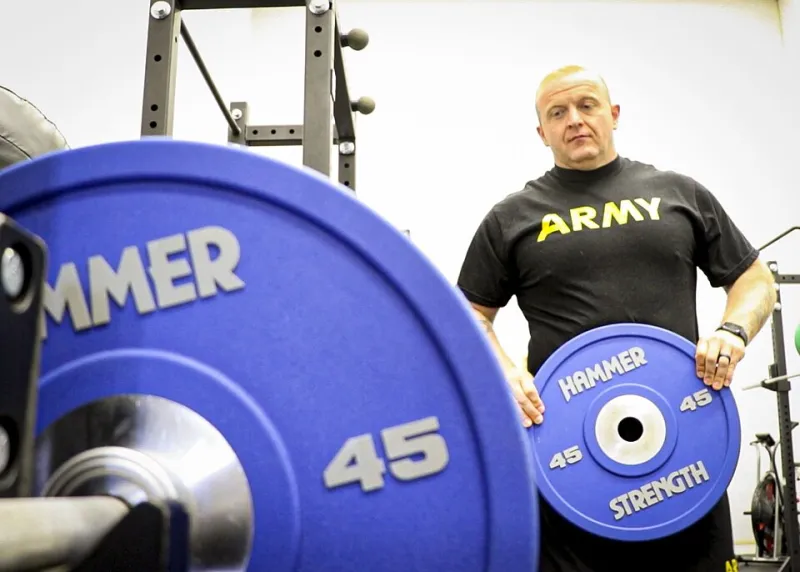
Photo: Marcy Sanchez, Public domain, via Wikimedia Commons
Every lifter hits the point where their program spreadsheet has more tabs than their tax return. Conjugate waves, tempo prescriptions, three different cable variations for the medial delts — it all feels productive until you realize you haven't progressed on anything in months.
So my training partner Marcus did something drastic. For one full year, he cut his entire program down to five movements:
- Barbell back squat
- Conventional deadlift
- Overhead press
- Barbell row
- Weighted farmer's carries
That's it. No curls. No lateral raises. No machines. Here's what a year of radical simplicity actually looked like.
Months 1–3: The Withdrawal Phase
The first six weeks were psychological detox more than physical training. Marcus described genuine anxiety walking past the cable station — the feeling that skipping isolation work meant his arms would shrivel. They didn't. His bodyweight went up four pounds in the first two months, almost all of it on his frame, because he was finally recovering from training instead of just accumulating volume.
The biggest early change? Session length dropped from 90 minutes to about 50. He stopped skipping workouts, because a five-lift session doesn't feel like an event you need to mentally prepare for.
Months 4–8: The Strength Surge
This is where it got interesting. With only five lifts, every session was measurable. There was nowhere to hide — if his squat didn't move, the program told him immediately.
By month eight: squat up 45 pounds, deadlift up 50, strict press up 20. His row climbed steadily. The carries, which he'd never trained directly, added visible trap and forearm size he'd chased with accessories for years.
The surprise was his arms. Without a single curl, his arms measured a half-inch bigger at month eight. Heavy rows and deadlifts, done with a tight grip and full effort, turned out to be enough stimulus — especially combined with the fact that he was finally eating and sleeping like someone whose program wasn't frying him.
Months 9–12: Where It Stalled — Honestly
Around month ten, the cracks showed. His overhead press plateaued hard, and honestly, so did his chest development — five lifts means no direct pressing volume beyond the overhead work, and his bench-era chest size slowly deflated. His knees also started complaining about the monotony of barbell-only squatting.
He finished the year anyway, but he'd be the first to say the last six weeks were about discipline, not progress. The lesson: minimalism works until a lift needs a stimulus the other four can't provide.
The Numbers at a Glance
- Squat: +45 lbs
- Deadlift: +50 lbs
- Overhead press: +20 lbs
- Bodyweight: +9 lbs (most of it lean)
- Arms: +0.5 inch
- Chest: slightly down
- Adherence: ~95% of planned sessions — his highest ever
Who This Actually Works For
This approach isn't for everyone, and pretending otherwise would be dishonest.
It works if you're: an intermediate lifter drowning in program-hopping, someone with limited time, or a beginner-to-intermediate who needs to build a base of genuine strength. It's also a fantastic off-season reset — three months of five lifts will fix the foundational weakness that fancy programming keeps papering over.
It doesn't work if you're: a physique competitor chasing symmetry, someone with a nagging injury that requires exercise variation, or an advanced lifter who genuinely needs more targeted volume to keep progressing.
The Takeaway
Marcus went back to a fuller program in year two — he added incline pressing and direct arm work within a month. But he kept the core philosophy: five movements, tracked relentlessly, done with full effort.
The real gain from his year of minimalism wasn't the 50 pounds on his deadlift. It was the discovery that most lifters don't need a better program. They need to stop collecting programs and start finishing one. Sometimes the most advanced thing you can do is pick five hard things and refuse to be distracted by anything else.