Everybody's Benching, Nobody's Pressing: The Forgotten Lift That Builds Shoulders Like Nothing Else

Photo: Sarah Marie Jones, CC0, via Wikimedia Commons
Every Monday night, the bench press stations at your typical Gold's or Crunch are stacked three deep. Meanwhile, over in the corner, the squat rack with the bar set for pressing stands completely open.
That empty space tells you everything about the state of modern training. The standing overhead press — once the crown jewel of upper body strength, the lift that old-school strongmen built entire physiques around — has become the most disrespected size builder in the gym. And lifters are leaving serious shoulder, trap, and upper-chest development on the table because of it.
Why the Press Fell Out of Fashion
Blame a few things. The bench press took over as the ego lift of choice — you can move more weight lying down, and moving more weight feels like progress. Then came the wave of shoulder-impingement fear-mongering that convinced a generation to swap pressing overhead for bands and lateral raises. And honestly? The press is hard. It demands mobility, bracing, and actual technique. Lateral raises don't.
But here's the thing: the lifters with the most impressive upper bodies — think classic physique guys, strongman competitors, Olympic lifters — all press overhead, and it shows.
The Three Form Failures That Make It Feel Awful
Most lifters who "hate" the overhead press don't hate the lift. They hate the broken version of it they've been doing.
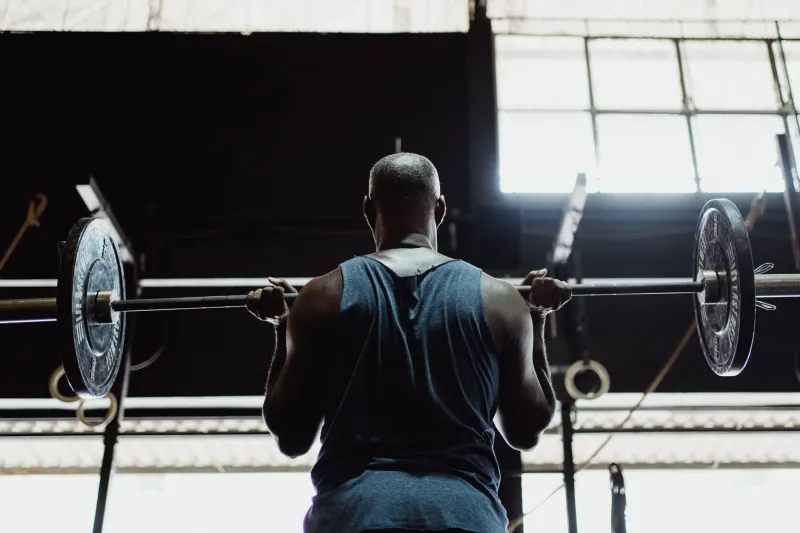
1. Pressing around your head instead of back over it. The bar should finish locked out over your mid-back and traps, not floating in front of your face. If you're pressing straight up from the shoulders, you're fighting your own anatomy. Lean back slightly, get your head "through the window" at the top, and the bar path snaps into place.
2. A lazy brace. Overhead pressing with a loose core is like benching on a marshmallow. Squeeze your glutes, brace your abs like you're about to take a body shot, and grip the bar hard. Suddenly the wobble disappears.
3. Grip too wide. A wide grip turns the press into a partial-range shoulder exercise with extra elbow stress. Set your grip just outside shoulder width, forearms roughly vertical at the bottom. Your wrists and shoulders will thank you.
A Progressive Template to Rebuild Your Press
Here's a simple two-day setup that slots into almost any upper body split:
Day 1 — Heavy: Standing barbell press, 5 sets of 3–5 reps. Add a little weight or a rep each week. Follow with weighted dips or close-grip incline pressing for 3 sets of 6–10.
Day 2 — Volume: Standing press or seated dumbbell press, 4 sets of 6–10 at a moderate load. Then hit lateral raises, rear delt work, and heavy shrugs — the press lights up your traps more than any lift short of a deadlift, and the accessories finish the job.
Run it for 8–12 weeks. Expect your press to climb, and expect your shirts to fit differently through the shoulders.
Stop Leaving It Empty
The bench will always have its fans, and that's fine. But if your delts look like an afterthought and your upper chest is flat, the answer might not be another chest day. It might be the open rack in the corner, a bar loaded to something humbling, and the patience to press your way to a wider, thicker upper body. Build bigger. The bar's right there.