You've Been Pulling Wrong This Whole Time: The Grip Width Secret That Unlocks Serious Lat Growth
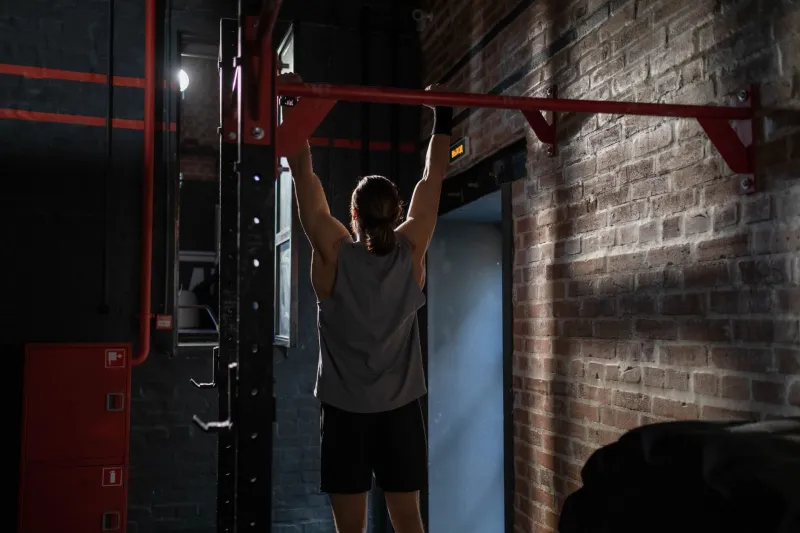
Let's be honest. You've been showing up, doing your rows, grinding through pull-ups, and still wondering why your back looks more like a rectangle than a V-taper. You're not lazy. You're not skipping sessions. You're just pulling wrong — and it's probably been happening since day one.
The culprit? Grip width. Specifically, defaulting to a shoulder-width grip on almost every pulling movement because it feels natural, feels safe, and nobody ever told you differently.
Here's the thing: shoulder-width isn't the gold standard. It's the default. And for a lot of lifters, it's quietly capping their back development in a way that no amount of extra volume is going to fix.
Why Shoulder-Width Became the Default (And Why That's a Problem)
Shoulder-width grip isn't wrong. It's just incomplete. It became the go-to recommendation because it's a stable, low-risk starting point that works reasonably well for most movement patterns. Coaches teach it. YouTube tutorials default to it. And over time, it became gospel.
But here's what that grip is actually doing to your lat activation: limiting it.
Your latissimus dorsi — the big wing-shaped muscle that creates back width — functions best when the humerus (upper arm bone) is positioned at a wider angle relative to your torso during the pull. When your grip is narrow, your elbows tend to travel close to your sides, which shifts emphasis toward your lower lats, rear delts, and rhomboids. That's not bad, but it's not what creates that wide, thick, cobra-back look most lifters are chasing.
Wider grips force the elbows to flare out more, increasing the mechanical stretch on the upper lat fibers and recruiting them more aggressively throughout the range of motion. Research on lat activation has consistently shown that wider grip pull-ups and lat pulldowns produce significantly greater upper lat engagement compared to narrower alternatives — and the upper lats are what give you that dramatic width when viewed from the front.
So if you've been wondering why your back feels thick but still looks narrow in photos, this is probably your answer.
What Actually Goes Wrong With Wide Grips
Here's where most lifters run into trouble: they try a wider grip, it feels awkward or weak, and they go right back to narrow. That experience gets labeled as "wide grips don't work for me" — but the real issue is form breakdown, not anatomy.
The three most common problems:
1. Shrugging instead of depressing the scapula. When your grip widens, your shoulders want to creep up toward your ears at the top of the movement. This kills lat activation and dumps load onto your traps and upper back. Before every single rep, you need to actively pull your shoulder blades down and back before initiating the pull. Think about putting your shoulder blades in your back pockets.
2. Turning it into a bicep movement. Wider grips require more deliberate elbow-leading mechanics. If you're thinking "pull the bar to me," your biceps take over. Instead, think "drive your elbows down and back toward your hips." That mental cue shifts the work exactly where you want it.
3. Shortening the range of motion. Wide grips feel harder at the bottom of the movement because the stretch on the lats is more intense. Most lifters unconsciously cut reps short to avoid that discomfort — which is exactly where a big chunk of lat development happens. Full stretch at the bottom is non-negotiable.
The Progressive Protocol to Expand Your Grip Range
You don't need to jump straight to an ultra-wide grip and white-knuckle your way through sets. That's how you blow out a shoulder. Instead, use a phased approach that builds the mobility, motor control, and strength to handle wider positions safely.
Phase 1 — Weeks 1-2: Awareness and Positioning
Stay at your current grip width but spend serious time on scapular mechanics. Do 3 sets of scapular pull-ups (dead hang, then just depress the shoulder blades without bending the elbows) before every back session. This builds the foundation that makes wider grips possible. Also add band pull-aparts to improve shoulder mobility and rear delt strength.
Phase 2 — Weeks 3-4: Incremental Widening on Pulldowns
Lat pulldowns are your safest entry point for grip experimentation because you control the load. Move your grip out one to two inches beyond shoulder width and drop the weight by 15-20%. Focus entirely on scapular depression before the pull and elbow-leading mechanics. If your form holds up, this is your new baseline.
Phase 3 — Weeks 5-6: Introduce Wide-Grip Pull-Ups
With bodyweight, you can't cheat the load — which makes wide-grip pull-ups an honest test of where your mechanics actually stand. Use a band for assistance if needed. Prioritize a full dead hang at the bottom and a controlled pause at the top. Three sets of 5-8 reps with perfect form beats six sloppy reps every time.
Phase 4 — Weeks 7+: Apply to Rows
Wide-grip barbell rows and cable rows are your next frontier. On a barbell row, a grip two to three inches outside shoulder width will change the feel of the movement significantly — you'll notice more upper back engagement and a deeper lat stretch at the bottom. Keep your torso angle consistent and avoid letting the wider grip pull your elbows out of a controlled path.
How Wide Is Too Wide?
This is a real question and it deserves a straight answer. Going excessively wide — think snatch-grip territory — actually starts to reduce lat activation again and dramatically increases shoulder stress. The sweet spot for most lifters is roughly 1.5 to 2 times shoulder width, depending on arm length and shoulder mobility.
If you're feeling pinching in the front of your shoulder, your grip is too wide or your shoulder mobility isn't ready yet. Back off and spend more time in Phase 1.
One More Thing Worth Saying
Grip width is one variable. It's a meaningful one, but it doesn't work in isolation. Your back development also depends on training frequency, progressive overload, and adequate protein intake. You can nail your grip width perfectly and still spin your wheels if you're under-eating or under-recovering.
But if you've been consistent, eating right, and still not seeing the back width you want? This is almost certainly part of the equation you've been missing.
Widen the grip. Fix the mechanics. Give it six weeks. Your lats have been waiting for this.