Your Bathroom Mirror Is Gaslighting Your Gains

The Reflection Isn't the Reality
Let's be honest — we've all done it. You finish a solid training session, hit the shower, and catch a glimpse of yourself in the bathroom mirror. Shoulders look capped, chest looks full, arms are popping. You think, man, this program is working. Then two days later, under the fluorescent lights at the gym, you look completely flat and wonder what went wrong.
Nothing went wrong. Your bathroom mirror happened.
The way most American homes are set up, bathroom mirrors are essentially the worst possible tool for tracking actual muscle development. Overhead lighting, small square footage, post-workout pump, and a mirror hung at a slight angle can turn a mediocre physique into a magazine cover — or make a legitimately jacked body look underwhelming. And when you're making training decisions based on that feedback, you're essentially letting a $30 Home Depot mirror run your programming.
Lighting Does More Heavy Lifting Than You Think
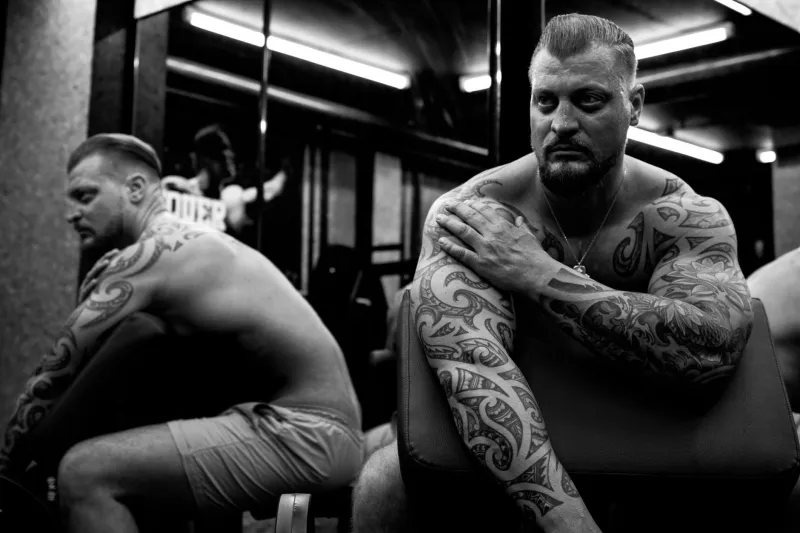
Here's the thing about lighting that most lifters never consider: contrast creates the illusion of size and definition. Overhead lighting — the kind most bathroom setups use — casts shadows directly downward, which carves out your traps, sharpens your chest striations, and makes your abs look like they've been sculpted. It's the same reason fitness photographers shoot from below with hard lighting. It's flattering by design.
Flat, even lighting — like the natural daylight coming through a window — is far more honest. It shows muscle bellies without the dramatic shadow contrast, which means you actually look smaller in neutral light even if you're making real progress. The problem is that most lifters never see themselves in neutral light. They see the bathroom version, the post-pump version, the perfectly angled version. And they start making decisions — dropping a program, switching exercises, cutting calories — based on a distorted baseline.
If your bathroom makes you look great on Monday but you feel discouraged by Thursday, the variable probably isn't your body. It's your lighting conditions.
The Angle Game Is Real — And It's Costing You
Mirror placement matters more than people realize. A mirror that's even slightly tilted forward makes you look taller and leaner. A mirror angled slightly back gives you a wider, blockier appearance. The distance you stand from the mirror changes how your proportions read. Stand two feet away and your upper body dominates the frame. Step back five feet and your legs finally show up.
Most bathroom mirrors are hung at a height that flatters eye-level viewing — which is great for checking your hair but terrible for assessing your quads, calves, or lower back development. If you've ever wondered why your leg training feels productive but your legs never seem to look any different, it might be because you're literally never seeing them at the right angle in your daily self-checks.
This isn't just a vanity issue. When you can't accurately perceive your weak points, you can't address them. You keep training what looks good in the mirror and neglecting what doesn't show up in your particular bathroom setup.
The Post-Pump Problem
Layered on top of all of this is timing. Most lifters do their mirror check right after training — which is exactly when your muscles are most engorged with blood and glycogen. That post-workout pump can add a legitimate inch or more to your arms and significantly changes how your chest and shoulders read visually. It's real size, but it's temporary size.
When you consistently assess yourself at peak pump under favorable lighting at a flattering angle, you build an internal benchmark that's impossible to live up to under neutral conditions. You start to believe your baseline looks like your peak. Then when reality doesn't match that benchmark — say, on a rest day, in natural light, when you're slightly depleted — the mental hit can make you feel like you're going backward even when you're not.
Some lifters actually abandon solid programs during this gap. They mistake the neutral-day version of themselves for stalled progress and start hopping to something new, never giving a good training block the chance to actually deliver results.
How to Build an Honest Assessment System
The fix isn't complicated, but it does require some intentionality.
Pick a consistent check-in time. Assess yourself at the same time of day, under the same conditions, at least 24 hours removed from your last training session. Morning, before eating, works well for most people. You're not pumped, you're not depleted from a rough day, and your body is in a relatively neutral state.
Use natural light or consistent artificial light. A room with a window and soft, even daylight is far more honest than a bathroom with recessed lighting above your head. If natural light isn't available, use a lamp placed to the side rather than directly overhead.
Standardize your distance and angle. If you're using a full-length mirror, stand at a fixed distance — say, six feet back — and make sure the mirror is mounted level, not angled. This sounds pedantic, but consistency is the entire point. You're not trying to look your best; you're trying to see the same version of yourself week over week so changes are actually visible.
Take progress photos instead of relying on live mirror checks. A photo taken in the same spot, same lighting, same time of day, every two to four weeks, is infinitely more reliable than daily mirror sessions. The camera doesn't care about your pump. It doesn't respond to your mood. It captures a fixed moment you can compare objectively over time.
Stop Letting Your Environment Make Your Programming Decisions
At the end of the day, your training program deserves a fair trial. If you're changing exercises, dropping volume, or switching methodologies because of what you see in a bathroom mirror after a chest pump on a Tuesday morning, you're not making data-driven decisions — you're making lighting-driven ones.
Real muscle development is slow, consistent, and often invisible in the short term. The lifters who build the most impressive physiques are usually the ones who've learned to trust the process over the perception. They track performance in the gym — weights moved, reps completed, volume accumulated — and they check in with their bodies under controlled, neutral conditions. They don't let a Home Depot mirror running on overhead incandescent bulbs talk them out of a program that's actually working.
Your gains are real. Make sure the environment you're using to evaluate them is real too.