Your Best Angle Is Your Worst Enemy: How Pose Obsession Kills Real Symmetry
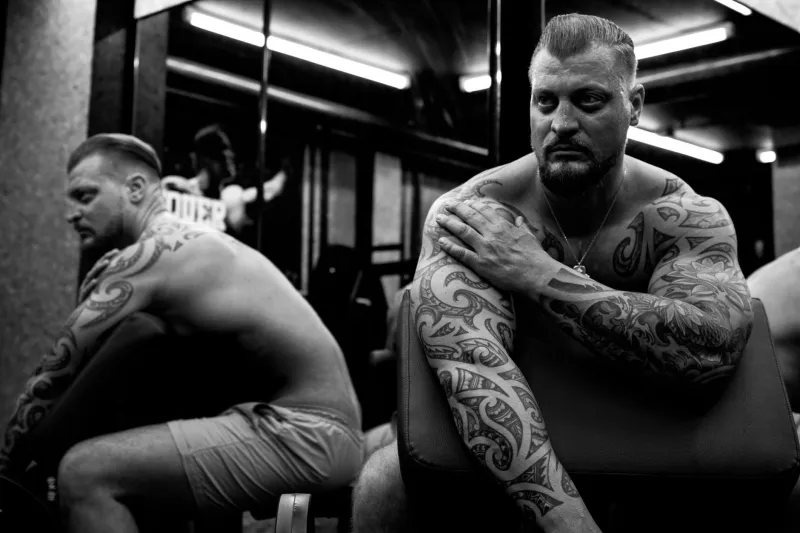
The Angle You Love Might Be Lying to You
You know the one. Maybe it's a slight left-side three-quarter turn with your arm raised just enough to pop the shoulder. Maybe it's a straight-on chest flex with the lighting catching your pecs perfectly. Whatever your go-to angle is, there's a solid chance you've started training for that angle without even realizing it.
This isn't vanity — it's human nature. We respond to feedback. When something looks good, we do more of it. But in the gym, that instinct can quietly steer your entire training program off a cliff. You start hammering the muscles that photograph well and neglecting the ones that don't. Over months and years, that adds up to some serious asymmetry hiding just out of frame.
Let's talk about why this happens, what it actually costs you, and how to build a physique that holds up under scrutiny from every angle.
Why Lifters Develop Angle Bias in the First Place
It starts innocently enough. You take a progress photo, and one shot just pops. Your shoulder looks capped, your waist looks tight, your arms look thick. You save that one. You share that one. You start comparing future photos to that one.
Over time, your brain files that angle away as your "real" physique. Everything else starts to feel like a bad photo rather than useful information. So what do you train? The stuff that makes that angle look better. More front delts. More upper chest. More bicep peak. Meanwhile, your rear delts, mid-back thickness, hamstrings, and lateral glutes — all the muscles that make a physique look complete from other angles — start falling behind.
This isn't unique to casual gym-goers either. Even competitive bodybuilders can fall into this trap if they're not actively auditing their look from multiple perspectives during prep.
The Muscles Most Likely Getting Shortchanged
Different "favorite angles" tend to neglect different muscle groups. Here's a quick breakdown of the most common blind spots:
The front-on guy: If you're always shooting straight ahead, you're probably crushing chest, quads, and front delts. What's getting ignored? Rear delts, upper back thickness, hamstrings, and glute development. From the side or back, the physique often looks flat and underdeveloped.
The side-profile guy: Loves the chest-to-waist sweep. Tends to neglect the width of the back (lats) and the roundness of the shoulders from the front. The physique can look narrow and one-dimensional from a front shot.
The three-quarter-turn guy: This is actually the most deceptive because it hides weaknesses on both sides. The dominant arm usually looks better, masking imbalances between left and right. Over time, this can entrench bilateral strength and size differences.
The common thread? Every angle has a shadow side — literally — and that shadow side is where your weaknesses are growing.
Building an Honest Physique Assessment System
The fix isn't complicated, but it does require some ego-checking. You need to start treating your physique assessment the same way a coach or judge would — systematically and without favoritism.
Step 1: The Eight-Point Check
Set up your phone or camera and take photos from eight distinct positions: front relaxed, front flexed, left side, right side, rear relaxed, rear flexed, and both three-quarter angles. Do this in consistent lighting, at the same time of day, roughly every four to six weeks. You're not looking for the best shot — you're looking for the full picture.
Step 2: Grade Every Angle Separately
After you have your eight shots, resist the urge to focus on the ones you like. Instead, rank each angle on a simple 1-to-5 scale across three criteria: muscle fullness, proportion, and symmetry. Be ruthless. The angles that consistently score low are telling you exactly where your programming needs work.
Step 3: Cross-Reference with Your Training Log
Now look at your actual training split. Are the muscle groups that dominate your weak-angle scores also the ones you're training least frequently, with the least volume, or with the least intensity? Odds are, the answer is yes. This is the moment where the data forces an honest conversation with your program.
Step 4: Rebalance Without Abandoning Strengths
You don't need to stop training your strong points — you just need to stop letting them eat up all your energy and attention. Shift your weakest muscle groups to the front of your week when your energy is highest. Add one dedicated accessory day or session block focused entirely on your lagging areas. Give them the same intentionality you've been giving your favorites.
The Symmetry Dividend
Here's the thing most lifters miss: fixing your weak angles actually improves your best angle too. Rear delt and upper back development creates the 3D shoulder look that makes front shots pop. Hamstring and glute work creates the hip-to-waist taper that makes side profiles look athletic rather than blocky. Building a complete physique isn't about sacrificing what you love — it's about making everything else catch up so the whole package looks better.
This is what separates a guy who looks great in one photo from a guy who looks great in every room he walks into.
Stop Optimizing for the Camera, Start Optimizing for the Mirror — All of It
Your favorite angle will always be your favorite angle. That's fine. But your training shouldn't be organized around it. The lifters who build truly impressive physiques aren't the ones who found the best light — they're the ones who put in the work to look just as good in the worst light.
Next time you're tempted to skip rear delt raises, ham curls, or any other "invisible" exercise because it doesn't show up in your best shot, remember: someone's always going to see you from behind. Build for that person too.
At Biggest Muscle, we talk a lot about building bigger. But bigger only means something when it's proportional, complete, and built to hold up from every angle. Start treating your weak sides like they matter — because they do.